









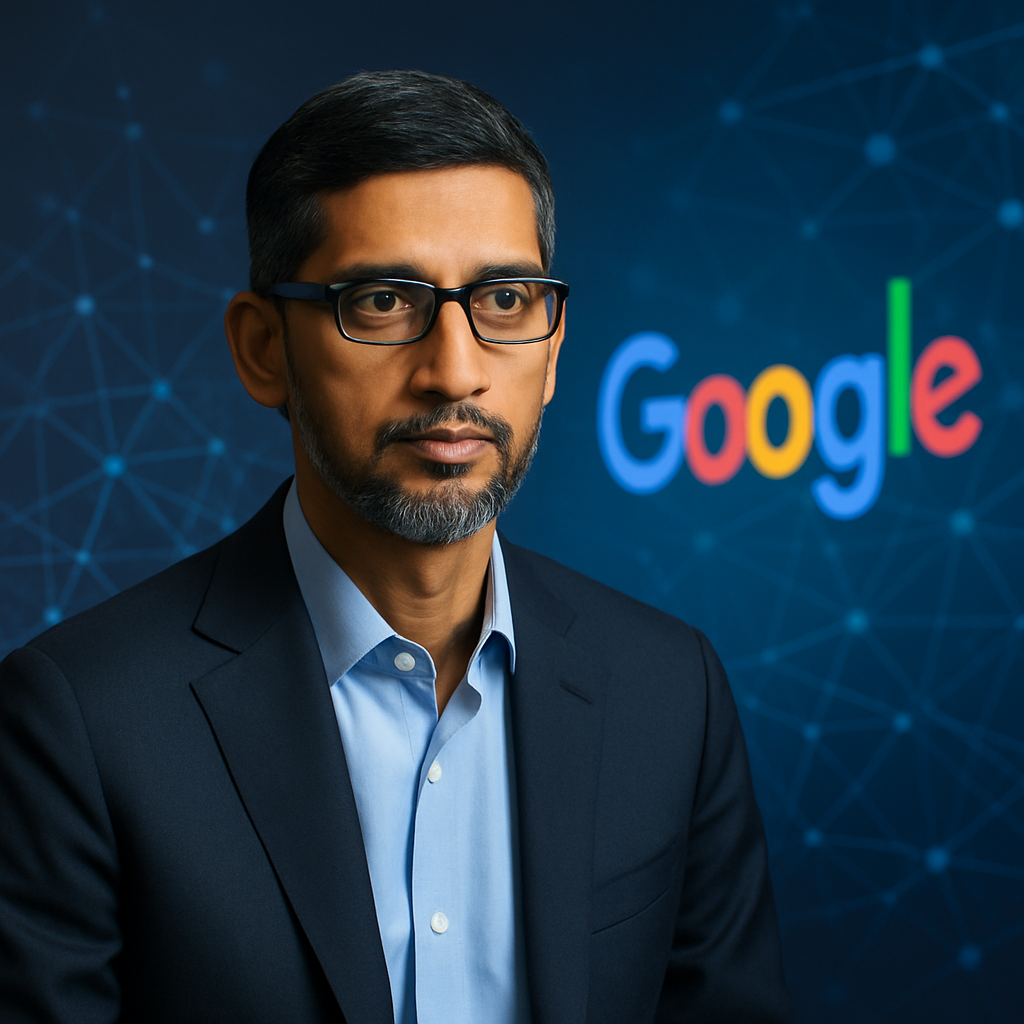
In 2025, Sundar Pichai, CEO of Alphabet Inc. and Google, has emerged as a pivotal figure in the technology industry, guiding the company through a transformative era marked by rapid advancements in artificial intelligence (AI), strategic investments, and a commitment to ethical innovation. Under his leadership, Google is not only enhancing its technological capabilities but also reshaping its organizational culture to align with the evolving digital landscape.
Embracing AI as a Collaborative Tool
At a major tech conference, Pichai emphasized that AI should be viewed as a powerful tool rather than a threat. He advocated for a future where humans work alongside AI, describing that future leadership at Google will be supported by an “extraordinary AI companion.” To maintain relevance in the rapidly evolving tech landscape, Pichai outlined eight strategies for technology professionals:
-
Design and build automation systems rather than just operating them.
-
Focus on tasks that require uniquely human creativity.
-
Learn to communicate with machines fluently.
-
Adopt a product-centric mindset.
-
Uphold ethical standards in AI development.
-
Lead hybrid human-machine teams effectively.
-
Engage actively in public discussions about technology.
-
Prioritize collaboration with AI rather than competition.
These insights underscore the importance of adaptability and proactive learning in an era increasingly shaped by AI.
Hands-On Approach to AI Development
Demonstrating a hands-on approach uncommon for an executive at his level, Pichai shared that he has been experimenting with AI-powered coding tools. He described a method he calls “vibe coding”—using natural language to prompt code generation instead of traditional manual coding. Pichai expressed a desire to dedicate more time to this innovative approach, highlighting his belief that AI will significantly transform professional workflows across all levels, from junior roles to executive functions.
Commitment to Workforce Expansion
In a move that challenges common fears about job losses due to AI, Pichai announced that Google will continue to hire engineers through 2026. He stated that AI is an “accelerator” that enhances engineers’ productivity rather than making them obsolete. Pichai emphasized that evolving technology would open new opportunities in emerging sectors without replacing human talent. He underscored the importance of maintaining a balanced perspective on AI’s potential and its current limitations.
Strategic Investments in AI Infrastructure
Alphabet is making a bold statement with its investment plans, allocating $75 billion in 2025 to enhance AI infrastructure. This funding focuses on data centers and servers to support advanced AI models, reinforcing the company’s commitment to maintaining its leadership in AI technology.
Ethical AI and Global Initiatives
Pichai’s leadership extends beyond technological advancements to include a strong emphasis on ethical AI development. At a global AI summit, he announced a $120 million Global AI Opportunity Fund aimed at expanding AI education and training worldwide, focusing on local languages and partnerships with nonprofits and NGOs. This initiative reflects Pichai’s vision of making AI accessible and beneficial to diverse communities across the globe.
Transforming Google Search
Pichai has announced significant AI-driven advancements for Google Search in 2025. Projects such as Astra and Gemini Deep Research are designed to transform search into an AI-powered assistant, enhancing user experience by addressing more complex queries and delivering richer, more intuitive results. These innovations aim to make Google Search more responsive and aligned with users’ evolving needs.
Navigating Legal and Compliance Challenges
In response to a shareholder lawsuit accusing Alphabet executives of breaching fiduciary duties and exposing the firm to antitrust liabilities, Google agreed to spend $500 million over the next ten years to overhaul its compliance structure. The settlement includes establishing a standalone board committee for risk and compliance, creating a senior executive committee reporting directly to CEO Sundar Pichai, and forming a compliance group consisting of product managers and internal experts. While Google denies any wrongdoing, it agreed to these measures to avoid extended litigation.
Conclusion
Sundar Pichai’s leadership in 2025 reflects a strategic blend of technological innovation, ethical considerations, and a commitment to workforce development. By embracing AI as a collaborative tool, investing heavily in infrastructure, and fostering an inclusive approach to technology, Pichai is steering Google toward a future where AI enhances human potential and drives global progress. His proactive stance on ethical AI and global initiatives further solidifies his role as a visionary leader in the technology industry.