









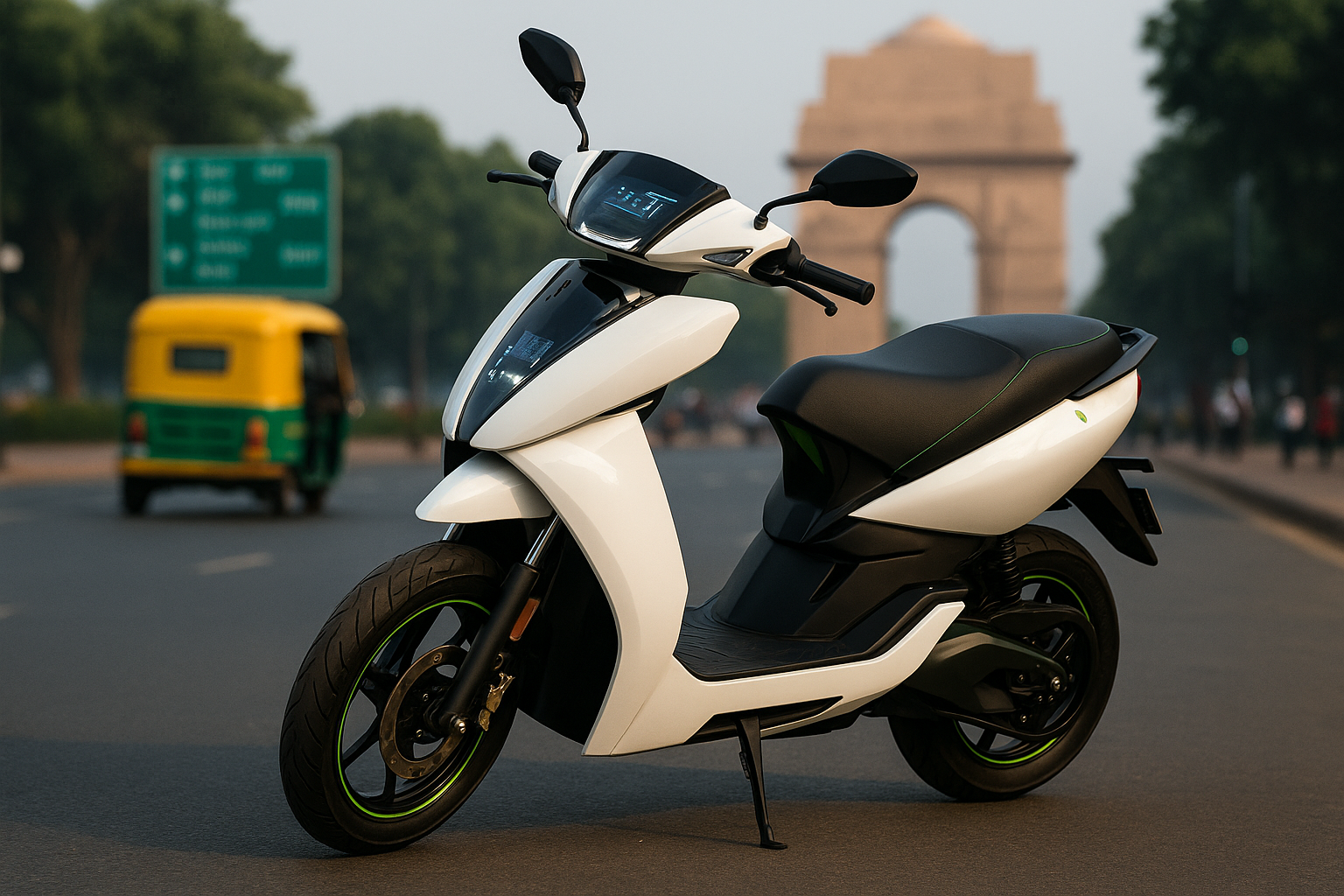
May 25, 2025 — On any busy street in India’s metropolitan sprawl, there’s a noticeable shift taking place — one that doesn’t roar but glides quietly. Electric two-wheelers, once a novelty, have now become a staple of Indian roads. The silent hum of e-scooters and e-bikes replacing traditional petrol-run motorcycles is not just a transportation trend; it represents a deeper, greener, and more technologically advanced transformation in urban India.
With fuel prices continuing to rise and concerns about air quality growing more urgent, electric mobility has found its most practical and promising expression in two-wheelers — the backbone of everyday transportation in India.
A Cultural and Economic Fit
India’s relationship with two-wheelers is deeply embedded in its urban and semi-urban fabric. From office-goers to students, delivery agents to homemakers, two-wheelers offer affordability, convenience, and maneuverability in congested cities.
The arrival of electric versions of these vehicles merges traditional utility with modern sustainability. Unlike expensive electric cars, e-scooters and e-motorcycles offer a realistic switch for the average commuter. With prices becoming increasingly competitive and government subsidies lowering barriers further, EVs have quickly captured public attention.
What’s more, the maintenance costs of electric two-wheelers are significantly lower. No engine oil, no spark plugs, no clutch cables — just a motor and a battery, often backed by warranties and service-free windows that attract the cost-conscious Indian buyer.
A Surge in Sales and Confidence
The year 2024 marked a critical inflection point. Electric two-wheeler sales in India crossed the three-million mark for the first time. Brands like Ola Electric, Ather Energy, TVS, and Bajaj have not just joined the race but are leading the charge. New-age startups are also innovating in this space, offering swappable batteries, AI-enabled dashboards, and app-based connectivity that rivals high-end automobiles.
This growth has been made possible by a mix of private innovation and public encouragement. The Faster Adoption and Manufacturing of Hybrid and Electric Vehicles (FAME) scheme has provided essential policy momentum. State governments, too, have offered incentives — from tax breaks to road tax waivers — to make electric vehicles more attractive.
Moreover, cities like Delhi, Bengaluru, and Pune are seeing dedicated charging infrastructure rise across public and private spaces, building user confidence and reducing “range anxiety.”
Tech-Driven Innovation on Two Wheels
Electric two-wheelers are not simply about replacing petrol with electricity; they’re smarter, safer, and more connected. Many new models come equipped with digital dashboards, GPS-based navigation, anti-theft technology, remote diagnostics, and even AI-based ride analytics.
The integration of mobile apps allows users to check battery levels, locate charging stations, or even unlock their vehicles without a key. These features, once seen only in premium vehicles, are now accessible at the tap of a smartphone — democratizing smart mobility.
Startups are also experimenting with predictive maintenance and fleet optimization tools, especially for delivery companies that rely on large two-wheeler fleets. With e-commerce and food delivery booming, these advancements have real economic utility beyond mere convenience.
Environmental and Health Benefits
The environmental case for electric mobility is undeniable. Two-wheelers are among the highest contributors to vehicular pollution in Indian cities. Switching to electric variants drastically reduces emissions, both carbon and particulate.
The impact on public health is profound. Reduced tailpipe emissions mean cleaner air, particularly in high-traffic zones. This translates to fewer respiratory illnesses, reduced urban heat, and overall better quality of life.
Even electricity generation — often criticized for being coal-heavy — is slowly greening in India, with solar and wind making up a growing share of the grid. As charging networks integrate with renewable energy sources, the life-cycle carbon footprint of EVs continues to drop.
The Battery and Charging Ecosystem
At the heart of every electric two-wheeler lies its battery — a component undergoing rapid innovation. Most Indian manufacturers are now investing in lithium-ion battery development with a focus on thermal safety, charging speed, and recycling.
Battery-as-a-service (BaaS) is also gaining ground. Several companies offer subscription-based swappable battery models, removing upfront costs and downtime for charging. Riders can simply pull up at a battery station and swap an empty pack for a full one in minutes.
This model is especially popular among delivery workers and ride-share drivers, who cannot afford long charging breaks. Over time, battery-swapping stations are expected to be as common as fuel pumps.
Creating Jobs and Empowering Small Businesses
The EV boom isn’t just reshaping streets — it’s also generating jobs. From manufacturing and assembly to service, charging network management, and battery logistics, a new ecosystem of employment is taking root.
Small businesses, too, are benefiting. Kirana store owners are using e-scooters for faster stock replenishment, while local service providers (plumbers, tutors, couriers) are adopting them to expand coverage without increasing costs.
Even rural areas are waking up to this shift. E-scooters are now being used by farmers to reach markets, women for accessing education and healthcare, and by micro-entrepreneurs as mobile units for sales or delivery.
Barriers Still to Cross
Despite the promising outlook, challenges remain. Charging infrastructure, while growing, is still unevenly distributed. Range anxiety persists, especially outside metro cities. Battery degradation over time and disposal methods are also critical concerns yet to be fully resolved.
Another barrier is consumer mindset. Some potential buyers still hesitate, fearing lack of service support, resale value issues, or uncertainties around long-term reliability. However, aggressive brand marketing, word-of-mouth success stories, and increasing visibility on roads are beginning to shift perceptions.
There is also the need for better financing options. While the upfront cost of EVs has decreased, affordable financing — especially for low-income users — is key to mass adoption. Banks and NBFCs are starting to offer EV-specific loans, but penetration is still low.
Looking Ahead: A Greener Road Forward
India’s electric two-wheeler movement is more than a trend; it’s a national shift in mobility philosophy. From urban sustainability to economic empowerment, its benefits span sectors and communities.
As technology continues to improve and costs continue to fall, it’s likely that electric two-wheelers will dominate new vehicle registrations by the end of this decade. More importantly, they will pave the way for broader electric mobility — influencing policy, infrastructure, and consumer expectations across the board.
The quiet revolution is here — not with the roar of engines, but the soft whirr of progress.