









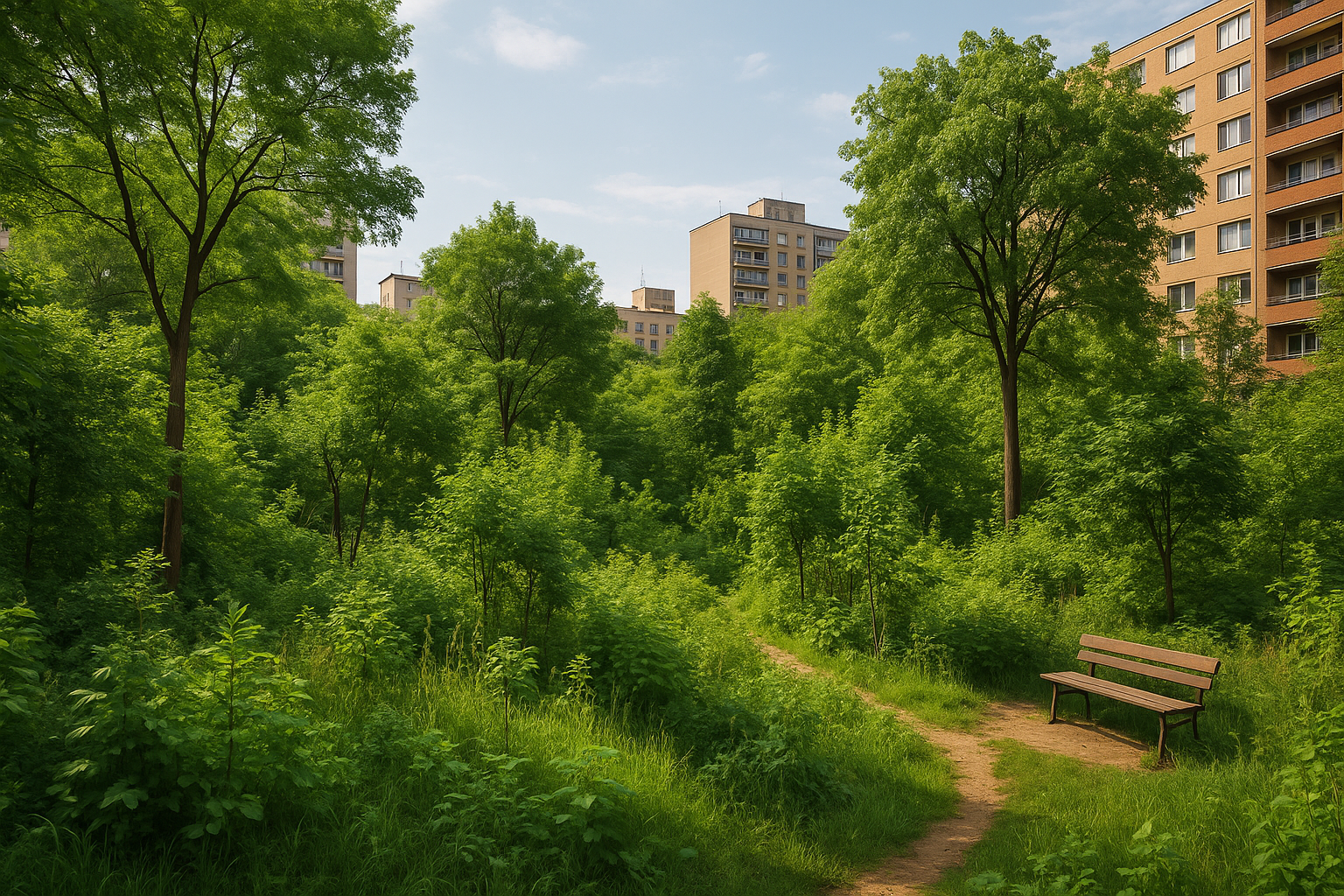
As India’s cities grow taller, wider, and more crowded, a quiet yet powerful movement is taking root — quite literally. Urban forestry, once an afterthought in city planning, is now emerging as a green lifeline in the face of rising pollution, climate stress, and declining quality of life.
Across Delhi, Bengaluru, Pune, and Hyderabad, citizens, NGOs, and city planners are working together to plant dense micro-forests, restore neglected patches, and turn concrete jungles into pockets of breathing space. This isn’t just about aesthetics — it’s about survival.
The Problem with India’s Urban Growth
India’s rapid urbanization has brought prosperity, innovation, and infrastructure — but also traffic, air pollution, heatwaves, and water shortages. In most metros, tree cover is rapidly declining due to road widening, metro construction, and illegal encroachments.
The lack of green buffers has led to worsening air quality, with cities like Delhi and Ghaziabad often topping the list of the most polluted cities in the world. Meanwhile, urban heat island effects make summer temperatures unbearable, especially for vulnerable communities living in slums or poorly ventilated housing.
Studies show that cities with more tree cover have lower temperatures, better mental health outcomes, and reduced respiratory diseases. Trees act as carbon sinks, noise reducers, flood regulators, and biodiversity havens — but in urban India, they are disappearing fast.
Enter the Urban Forest
An urban forest is not just a park. It is a dense, native ecosystem created in limited space, mimicking a natural forest. The Miyawaki method — developed by Japanese botanist Akira Miyawaki — has become popular in India for building such forests on small plots, with hundreds of trees planted close together to grow rapidly.
In cities where land is scarce, this method allows 300–500 trees to grow on a plot as small as 1,000 sq. ft. These forests grow 10 times faster and are 30 times denser than conventional plantations, achieving maturity in just 3–5 years.
Where It’s Happening
-
Delhi has seen over 50 micro-forests built in school grounds, residential colonies, and alongside expressways.
-
Bengaluru, once known as the Garden City, is reclaiming its title with citizen-led drives to reforest tech parks, lakesides, and urban dead spaces.
-
Pune and Nashik have become hotspots for urban forest experiments, with collaborations between municipal bodies and local green warriors.
Public parks are also getting transformed into mini-jungles with native flora, butterfly gardens, herbal plantations, and meditation trails.
Who’s Leading the Charge
The success of India’s urban forest movement is rooted in community participation. From schoolchildren to senior citizens, housing societies to IT professionals — everyone is involved.
NGOs like SayTrees, Afforestt, and Mission Green Mumbai are working with city governments to identify sites, plan biodiversity strategies, and maintain these forests. Corporate social responsibility (CSR) funds are being channeled into such green projects as companies become more conscious of their environmental footprint.
Social media has also played a huge role, inspiring people to join plantation drives and post updates on the growth of their “own” trees.
Benefits Beyond Greenery
Urban forests offer much more than shade. They:
-
Cool down surrounding areas by 2–5°C.
-
Improve air quality by absorbing pollutants.
-
Provide a habitat for birds, bees, butterflies, and small animals.
-
Enhance mental well-being for residents living nearby.
-
Recharge groundwater and reduce surface runoff during rains.
In crowded cities where every square foot matters, the emotional and environmental value of such green lungs cannot be overstated.
Challenges on the Path
Despite the enthusiasm, urban forestry faces multiple challenges:
-
Land availability is the biggest roadblock. Vacant lands are often earmarked for development or suffer from encroachments.
-
Maintenance is inconsistent. While plantation events get media attention, post-planting care is often neglected, leading to poor survival rates.
-
Invasive species planted in some projects (like eucalyptus) can harm the soil and biodiversity.
-
Coordination gaps between departments, and lack of public awareness, can delay or derail projects.
Solving these issues requires long-term vision, inter-agency cooperation, and public involvement beyond token gestures.
Cities Need Forests More Than Ever
With India projected to have 7 megacities by 2030, the need for integrating nature into urban planning is urgent. Green infrastructure should not be considered a luxury, but a critical component of urban resilience.
Tree-lined streets, green rooftops, vertical gardens, and community forests must become default parts of real estate and civic development. Urban forests not only mitigate climate change — they transform city living from survival to sustainability.
The Road Ahead
To make this green wave permanent, city governments must:
-
Map and protect existing green spaces through digital tracking.
-
Offer incentives to residents and RWAs for maintaining community forests.
-
Involve local schools in stewardship programs.
-
Penalize illegal tree felling and reward biodiversity restoration.
-
Integrate urban forestry in Smart Cities and Urban Development Missions.
India is at a crossroads — either continue down the path of unchecked urban expansion or redesign its cities as green, inclusive, and livable.
Thankfully, thousands of Indians are choosing the latter. With a sapling in hand and community by their side, they are growing more than trees — they are growing hope.