









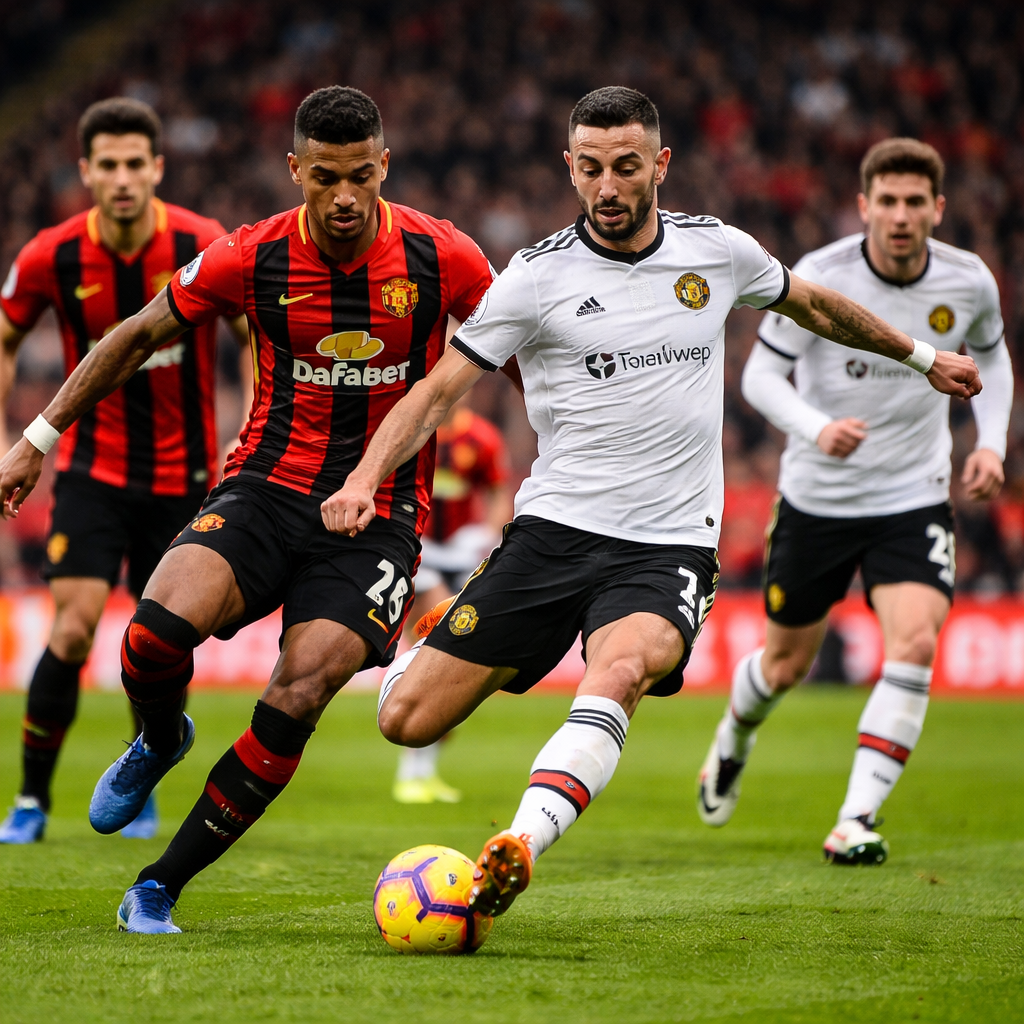
The latest chapter in the AFC Bournemouth vs Manchester United rivalry delivered everything football fans could hope for—goals, controversy, and high drama—as the two sides played out an intense 2-2 draw in the Premier League. The clash at the Vitality Stadium not only showcased attacking brilliance but also reignited debates over officiating decisions that ultimately shaped the outcome.
For Manchester United, the result felt like two points dropped in their pursuit of a top-four finish, while Bournemouth extended their unbeaten run but continued a frustrating streak of draws. The match encapsulated the unpredictability of the Premier League, where momentum shifts and controversial calls often determine the final narrative.
High Stakes and Tactical Setup
Coming into the fixture, Manchester United were firmly in the race for UEFA Champions League qualification, sitting near the top end of the table. Bournemouth, on the other hand, were comfortably mid-table but eyeing a potential push into the top half.
Both managers opted for a 4-2-3-1 formation, emphasizing attacking width and midfield control. Bournemouth’s lineup featured key attacking threats such as Evanilson leading the line and Amine Adli operating in advanced roles, while Manchester United relied on the creative influence of Bruno Fernandes and the energy of their midfield.
The stage was set for an evenly matched contest, and it did not disappoint.
First Half: United Control, Bournemouth Resist
The opening stages saw Manchester United assert dominance in possession, controlling the tempo and probing Bournemouth’s defensive structure. Their midfield dictated play, with Bruno Fernandes orchestrating attacks and linking effectively with the forward line.
Despite United’s control, Bournemouth remained dangerous on the counterattack. The pace and movement of Evanilson stretched United’s defensive line, while Adli’s positioning between the lines created pockets of space.
However, the first half ended goalless, with both teams unable to convert their chances into goals. United’s lack of clinical finishing and Bournemouth’s disciplined defensive organization ensured the deadlock remained intact at halftime.
Second Half Explosion: Goals and Momentum Swings
The second half began with renewed intensity, and the breakthrough arrived shortly after the restart. Bruno Fernandes gave Manchester United the lead from the penalty spot after a foul inside the box, calmly converting to put the visitors ahead.
The lead, however, was short-lived.
Bournemouth responded almost immediately through a well-worked attacking move that resulted in a composed finish, bringing the home side level and igniting the crowd. The goal injected belief into Bournemouth and shifted the momentum firmly in their favor.
Manchester United regained the advantage soon after when sustained pressure forced a defensive error, resulting in an own goal that restored their lead. At that stage, it appeared the visitors had regained control and were on course for a crucial victory.
Turning Point: Red Card and Penalty Drama
The defining moment of the match came in the latter stages when Manchester United were reduced to ten men following a controversial red card decision against Harry Maguire. The foul inside the penalty area not only led to his dismissal but also handed Bournemouth a golden opportunity to equalize.
The penalty was duly converted, leveling the score at 2-2 and setting up a tense and dramatic finale.
The decision sparked widespread debate, particularly when compared to an earlier incident involving a challenge on a Manchester United attacker that did not result in a penalty. Questions over consistency in officiating quickly became a major talking point, overshadowing much of the match’s footballing quality.
Final Minutes: Pressure and Missed Chances
With the numerical advantage, Bournemouth pushed aggressively in search of a winning goal. Their attacking play became more direct and urgent, testing Manchester United’s defensive resilience.
United, meanwhile, were forced into a compact defensive setup, focusing on organization and discipline to preserve the draw. The backline came under sustained pressure, but crucial interventions and a determined effort ensured they avoided conceding a late winner.
Despite extended stoppage time and several promising moments for the home side, neither team could find the decisive goal. The match ended in a 2-2 draw, a result that reflected both the attacking quality and defensive vulnerabilities displayed throughout the game.
Standings Impact and Season Implications
The draw carries significant implications for both teams as the season progresses.
For Manchester United, dropping points in such circumstances could prove costly in the race for Champions League qualification. Matches like these, where victory seemed within reach, often define the outcome of a season.
Bournemouth, on the other hand, will take encouragement from their performance against a top opponent. However, their inability to convert strong displays into victories remains a concern, as repeated draws limit their ability to climb higher in the standings.
Key Performers
Bruno Fernandes – The Creative Leader
The Manchester United captain once again demonstrated his importance, contributing a goal and dictating the tempo of play. His vision and passing were central to United’s attacking efforts.
Evanilson – A Constant Threat
Leading the line for Bournemouth, Evanilson caused persistent problems for the opposition defense. His movement, strength, and ability to win crucial fouls made him a standout performer.
Amine Adli – Attacking Intelligence
Operating in advanced areas, Adli played a key role in linking midfield and attack. His positioning and technical ability added creativity and unpredictability to Bournemouth’s forward play.
Tactical Analysis
From a tactical perspective, the match highlighted two contrasting styles.
Manchester United relied on structured build-up play, focusing on maintaining possession and creating opportunities through patient attacking moves. Their use of width and midfield control allowed them to dictate large portions of the game.
Bournemouth, by contrast, adopted a more direct and transition-based approach. They looked to exploit spaces left by United’s advancing players, using pace and quick passing to launch counterattacks.
The red card proved to be a decisive tactical turning point. Reduced to ten men, Manchester United were forced to abandon their attacking approach and shift into a defensive structure, allowing Bournemouth to dominate the final stages.
Officiating Debate
One of the most significant narratives to emerge from the match was the controversy surrounding refereeing decisions.
The inconsistency in awarding penalties became a focal point of discussion, with players and analysts questioning the application of rules and the role of VAR in such situations. These debates continue to shape conversations around modern football, highlighting the challenges faced by officials in high-pressure matches.
Historical Context
Encounters between Bournemouth and Manchester United have become increasingly competitive in recent years. While Manchester United traditionally hold the upper hand in terms of history and resources, Bournemouth have shown they are capable of challenging elite teams.
This match further reinforced that trend, demonstrating the growing competitiveness within the league.
Looking Ahead
Manchester United will need to quickly regroup and address key issues, particularly defensive discipline and game management. With crucial fixtures ahead, maintaining consistency will be essential to achieving their season objectives.
Bournemouth, meanwhile, can build on this performance as they look to convert draws into wins. Their attacking potential and resilience suggest they are capable of finishing higher in the table if they can improve their efficiency in front of goal.
Conclusion
The 2-2 draw between AFC Bournemouth and Manchester United was a compelling showcase of Premier League football. Filled with goals, controversy, and late drama, the match highlighted both the strengths and weaknesses of the two sides.
For Manchester United, it will be remembered as a missed opportunity to secure valuable points. For Bournemouth, it represents a resilient performance against one of the league’s biggest clubs.
Ultimately, the match served as a reminder of the Premier League’s unpredictability and excitement. As the season continues, both teams will look back on this encounter as a defining moment—one that could influence their respective campaigns in the weeks to come.