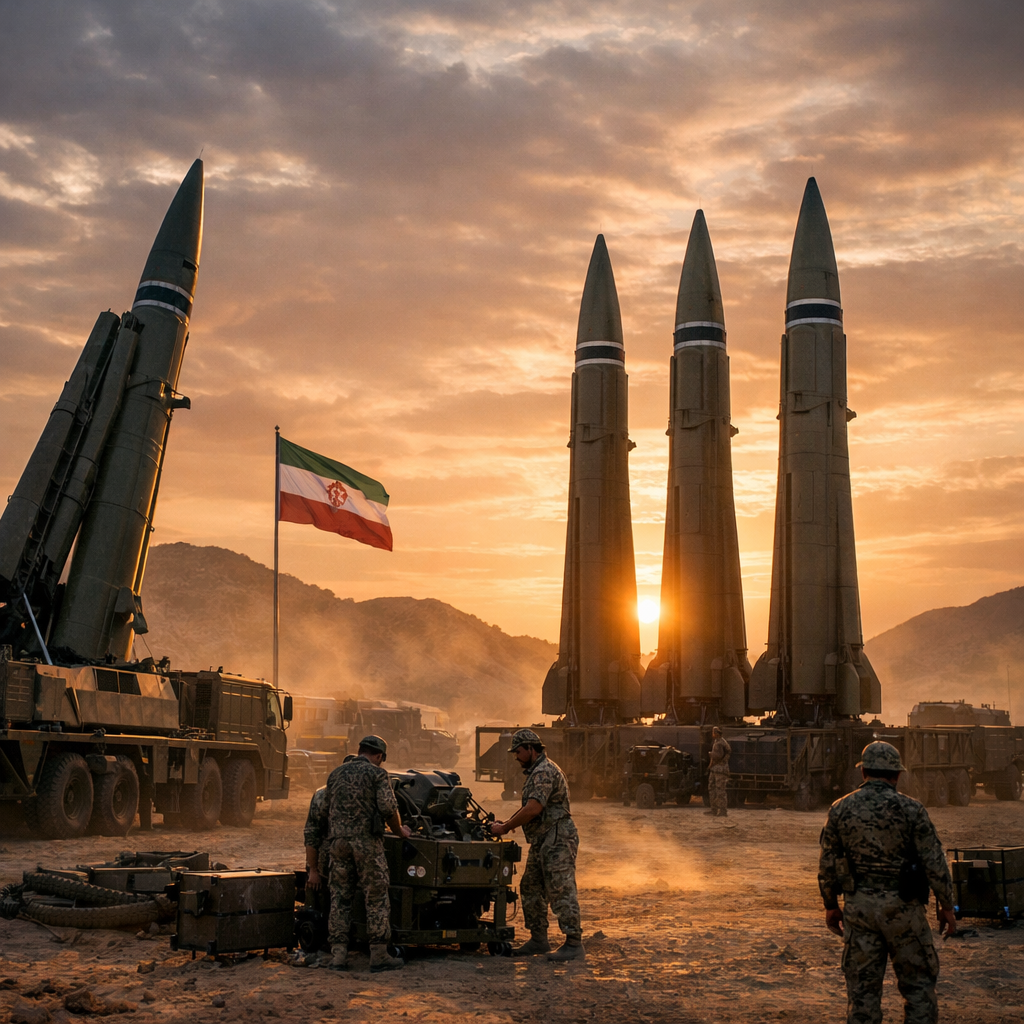
Introduction: Iran’s Military at a Critical Juncture
Iran’s military has entered one of the most decisive phases in its modern history. Facing increasing pressure from global powers, economic sanctions, regional rivalries, and internal challenges, the Islamic Republic has significantly reshaped its defense posture. In 2026, Iran’s armed forces are not only focused on territorial defense but also on deterrence, strategic depth, and influence across the Middle East.
With tensions escalating in the Persian Gulf, heightened rhetoric from the United States and Israel, and ongoing conflicts involving Iran-aligned groups in the region, Iran’s military has become a central pillar of national security and foreign policy. This article explores Iran’s military structure, capabilities, doctrine, and future outlook in a rapidly changing geopolitical environment.
Iran’s Military Structure and Organization
Iran’s armed forces are unique in their dual-command system, consisting of two major institutions that operate independently yet coordinate closely during crises.
The Regular Armed Forces (Artesh)
The Artesh is Iran’s conventional military, responsible for defending the country’s borders, airspace, and territorial waters. It includes:
-
Ground Forces
-
Air Force
-
Navy
-
Air Defense Units
The Artesh focuses primarily on traditional warfare and territorial defense rather than ideological missions.
Islamic Revolutionary Guard Corps (IRGC)
The IRGC operates parallel to the regular army and answers directly to Iran’s Supreme Leader. It plays a dominant role in national security and includes:
-
IRGC Ground Forces
-
IRGC Navy
-
IRGC Aerospace Force
-
Quds Force (external operations)
The IRGC also holds significant economic and political influence within Iran, making it one of the most powerful institutions in the country.
Command Structure and Military Decision-Making
Over the past few years, Iran has strengthened centralized military command. Strategic decisions increasingly flow through councils dominated by senior commanders and advisors close to the Supreme Leader. This structure allows for rapid response during crises but also reflects Iran’s anticipation of high-intensity conflict scenarios.
Joint exercises and unified command drills indicate growing coordination between the IRGC and the Artesh, especially in missile defense, airspace protection, and naval operations.
Missile Program: Iran’s Core Deterrent
Iran’s missile program remains the backbone of its defense strategy. Due to restrictions on acquiring modern aircraft and advanced foreign weaponry, Iran has invested heavily in missile development.
Ballistic Missile Capabilities
Iran possesses one of the largest missile arsenals in the Middle East, including short-range and medium-range ballistic missiles. These systems are designed to:
-
Deter foreign military attacks
-
Target strategic assets in the region
-
Compensate for limitations in air power
Recent upgrades emphasize precision guidance, mobility, and survivability, allowing missiles to be launched from concealed and hardened platforms.
Strategic Importance
Iran views its missile force as a non-negotiable element of national defense. Military leaders consistently state that missiles are purely defensive, yet regional rivals perceive them as a major threat due to their range and accuracy.
Drone and Unmanned Systems Expansion
Iran has emerged as a significant developer of unmanned aerial vehicles (UAVs), which play a crucial role in surveillance, reconnaissance, and strike operations.
Operational Uses
Iranian drones are used for:
-
Border monitoring
-
Maritime patrols
-
Intelligence gathering
-
Precision strikes
These systems provide Iran with cost-effective force multiplication and allow it to project power without risking manned aircraft.
Strategic Impact
Drones enable Iran to conduct asymmetric operations and maintain persistent surveillance over key regions. They also support allied groups in the Middle East, enhancing Iran’s regional influence.
Naval Power and the Strait of Hormuz
Iran’s naval strategy is heavily influenced by geography, particularly its control over access to the Strait of Hormuz — one of the world’s most important maritime chokepoints.
Naval Forces Composition
Iran operates two naval forces:
-
The regular Navy, focused on blue-water operations
-
The IRGC Navy, specialized in fast-attack craft, coastal defense, and asymmetric warfare
This dual structure allows Iran to conduct both conventional and unconventional maritime operations.
Maritime Doctrine
Iran’s naval doctrine emphasizes:
-
Swarm tactics using fast boats
-
Anti-ship missiles
-
Naval mines
-
Coastal defense systems
These capabilities are designed to deter or disrupt superior naval forces in the event of conflict.
Air Defense and Electronic Warfare
Iran has invested significantly in air defense systems to protect critical infrastructure, military bases, and strategic facilities.
Layered Defense Systems
Iran employs a combination of:
-
Long-range air defense missiles
-
Medium-range interception systems
-
Radar and early warning networks
This layered approach aims to reduce vulnerability to airstrikes and missile attacks.
Electronic and Cyber Warfare
Iran has also expanded its electronic warfare and cyber capabilities, which are considered integral to modern conflict. These systems are used to:
-
Jam enemy communications
-
Disrupt navigation systems
-
Defend against cyber intrusions
Military Exercises and Combat Readiness
Iran regularly conducts large-scale military exercises to demonstrate readiness and deterrence.
Purpose of Drills
Military drills serve multiple objectives:
-
Testing new weapons systems
-
Improving coordination between branches
-
Signaling strength to adversaries
-
Boosting domestic morale
Recent exercises have focused on missile launches, air defense simulations, naval engagements, and rapid mobilization scenarios.
Regional Conflicts and Proxy Strategy
Iran’s military influence extends beyond its borders through a network of allied groups across the Middle East.
Strategic Depth
Iran supports aligned factions in:
-
Iraq
-
Syria
-
Lebanon
-
Yemen
This approach provides strategic depth, allowing Iran to deter adversaries far from its own borders.
Geopolitical Implications
While Iran views this network as defensive, rival states consider it destabilizing. This has made proxy conflict a defining feature of Middle Eastern security dynamics.
Relations with the United States and Israel
Iran’s military planning is heavily shaped by its adversarial relationships with the United States and Israel.
Deterrence Messaging
Iranian military leaders frequently emphasize readiness for full-scale conflict if attacked. Statements highlight:
-
Immediate retaliation
-
Regional escalation
-
Defense of sovereignty at all costs
Risk of Escalation
Military deployments, naval patrols, and exercises increase the risk of miscalculation, particularly in contested areas such as the Persian Gulf and regional airspace.
Internal Challenges and Domestic Security
Iran’s military is also tasked with maintaining internal stability amid economic difficulties and public dissatisfaction.
Role in Internal Security
Security forces, including paramilitary units, are often deployed to:
-
Control unrest
-
Protect government institutions
-
Maintain public order
This dual role places strain on resources and complicates military planning.
Impact on Military Cohesion
Extended internal deployments can affect morale and readiness, forcing commanders to balance domestic priorities with external defense responsibilities.
Defense Industry and Sanctions Resilience
Despite decades of sanctions, Iran has developed a robust domestic defense industry.
Self-Sufficiency Goals
Iran produces:
-
Missiles
-
Drones
-
Radar systems
-
Naval vessels
-
Armored vehicles
This self-reliance reduces dependence on foreign suppliers and ensures continuity during prolonged pressure.
Technological Adaptation
Iran focuses on incremental innovation, reverse engineering, and domestic research to overcome technological barriers imposed by sanctions.
Military Doctrine and Strategic Philosophy
Iran’s military doctrine is based on deterrence, resilience, and asymmetric warfare.
Key Principles
-
Avoid direct large-scale conventional war
-
Raise the cost of aggression for adversaries
-
Maintain regional influence
-
Protect regime stability
This doctrine reflects Iran’s assessment of its strengths and limitations.
Future Outlook: What Lies Ahead for Iran’s Military
As 2026 unfolds, several trends are likely to define Iran’s military trajectory:
-
Continued modernization of missile and drone systems
-
Expansion of air defense and electronic warfare
-
Increased joint operations between IRGC and regular forces
-
Persistent regional proxy engagement
-
Ongoing tension with global and regional rivals
Iran’s military will remain a key factor shaping Middle Eastern security and global strategic calculations.
Conclusion
Iran’s military in 2026 represents a complex blend of conventional forces, asymmetric capabilities, and strategic deterrence. Despite economic constraints and diplomatic isolation, Tehran has maintained a formidable defense posture aimed at protecting sovereignty and projecting influence.
As regional tensions persist and global attention remains focused on the Middle East, Iran’s armed forces will continue to play a decisive role in shaping both national security and regional stability.