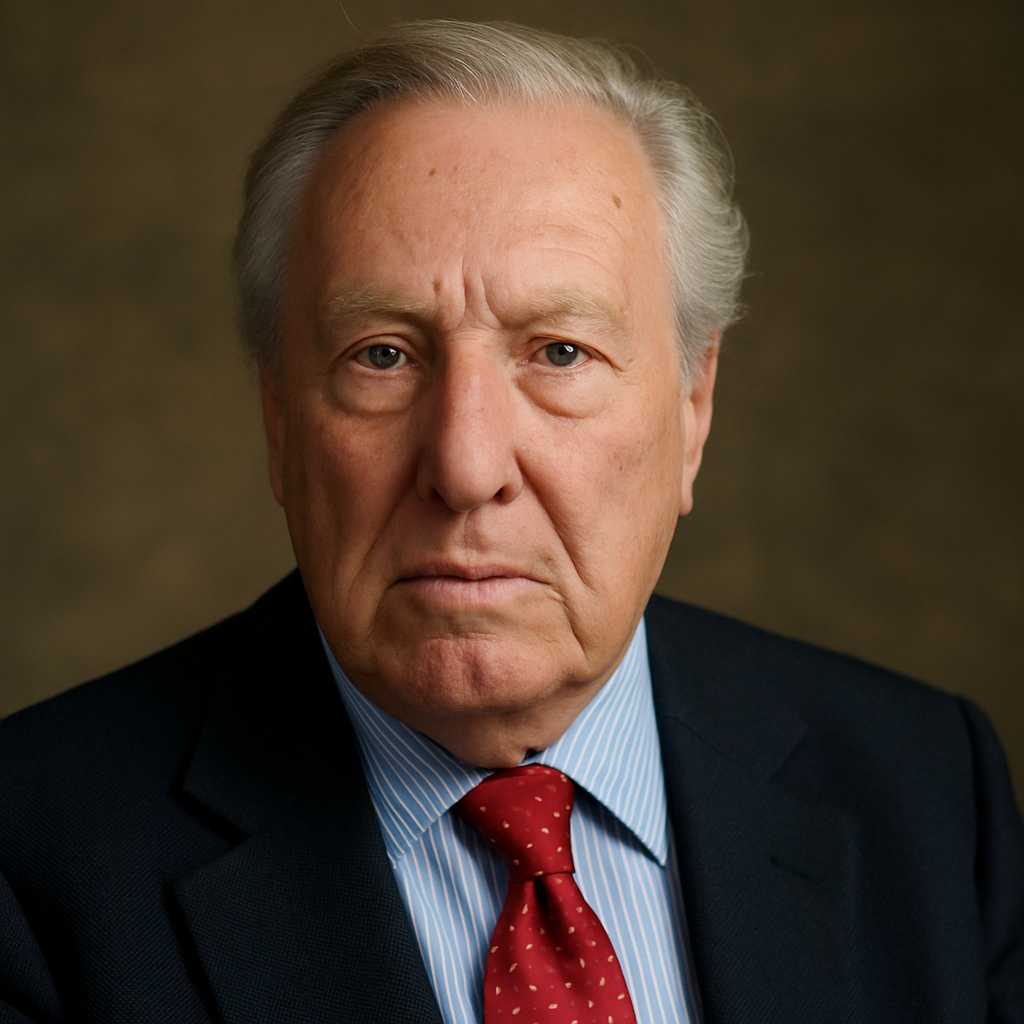
Frederick Forsyth, one of the most influential thriller writers of the 20th and 21st centuries, has passed away at the age of 86. Known for his razor-sharp realism, gripping plots, and insider knowledge of espionage, Forsyth was a legend whose work not only entertained but informed generations of readers. His death marks the end of an era in political and spy fiction.
The Final Chapter
Frederick Forsyth died peacefully at his home in Buckinghamshire after a brief illness. His family confirmed the news in a short statement, expressing pride in his accomplishments and gratitude for the outpouring of affection from readers across the globe.
With a writing career spanning more than five decades and over 75 million books sold worldwide, Forsyth’s contribution to modern thriller literature is unmatched. His influence stretched far beyond fiction—into journalism, intelligence commentary, and even international policy debates.
Early Life: From RAF Pilot to Reporter
Born on August 25, 1938, in Ashford, Kent, England, Frederick McCarthy Forsyth displayed early signs of intellectual and linguistic brilliance. He was educated at Tonbridge School and later at the University of Granada in Spain, where he mastered several languages. His first career path led him to the skies when he joined the Royal Air Force at the age of 19.
Although trained as a jet pilot, Forsyth soon transitioned to journalism. He began reporting for Reuters and later the BBC. His assignments took him across volatile global regions—from East Berlin during the Cold War to the Nigerian Civil War in the 1960s. It was in these tumultuous theaters that Forsyth developed the observational precision and geopolitical knowledge that would later define his novels.
Secret Life as a Spy
Few authors have lived lives as eventful as the characters they wrote about, but Forsyth did just that. In later years, he revealed that while covering the Biafran conflict in Nigeria, he had acted as an informal agent for the British intelligence service, MI6. Though unpaid, his missions included delivering classified reports and gathering sensitive data under the cover of journalistic neutrality.
These experiences provided him with intimate access to the world of espionage. Rather than relying on imagination, Forsyth could draw on firsthand encounters with spies, mercenaries, arms dealers, and revolutionaries. This unique background lent his work an authenticity rarely matched by others in the genre.
Literary Breakthrough: The Day of the Jackal
Forsyth’s breakthrough came in 1971 with the publication of The Day of the Jackal. The story follows a mysterious, methodical assassin hired to kill French President Charles de Gaulle. What made the novel revolutionary was its detailed procedural approach. Readers were taken through the assassin’s planning, identity creation, and execution phases with near-journalistic clarity.
The novel was an instant success and became a bestseller worldwide. It was later adapted into an acclaimed film and is now considered a benchmark in the political thriller genre. Forsyth had set a new gold standard—one that emphasized plausibility, pacing, and precision.
A String of Masterpieces
Forsyth didn’t stop with just one hit. His subsequent novels continued to showcase his exceptional talent for turning complex international affairs into compelling narratives. Some of his most notable works include:
-
The Odessa File (1972): A journalist uncovers a network of former Nazis hiding in post-war Germany.
-
The Dogs of War (1974): A chilling tale of mercenaries hired to overthrow an African regime.
-
The Devil’s Alternative (1979): A high-stakes political crisis involving the USSR, NATO, and environmental catastrophe.
-
The Fourth Protocol (1984): Soviet agents plot to detonate a nuclear device in the UK.
-
The Fist of God (1994): An espionage thriller set during the Gulf War.
-
The Afghan (2006), The Cobra (2010), and The Kill List (2013): All continued his tradition of blending real-world intelligence operations with fast-paced fiction.
Each of these works reflected Forsyth’s deep understanding of global politics and security affairs, often anticipating real-life developments years in advance.
Distinctive Writing Style
What set Forsyth apart was his writing method. He famously spent months conducting research—interviewing experts, combing through declassified documents, and traveling to conflict zones—before sitting down to write. Once he began, the book would usually be completed in just a few weeks.
He preferred handwritten drafts and resisted the allure of digital tools well into the 21st century. His dedication to factual detail and realistic portrayal of covert operations earned him a loyal fanbase that included intelligence officers, journalists, and policymakers.
Journalism, Opinions, and Public Life
Even as a bestselling author, Forsyth never left journalism behind. He continued to write columns and essays on subjects ranging from international affairs to domestic politics. He was known for his sharp wit, firm convictions, and unapologetically traditional views.
Forsyth was a vocal supporter of Brexit and a frequent critic of liberal politics and media censorship. He often clashed with contemporary political trends but never backed down from expressing his opinions.
In an era increasingly dominated by ideological conformity, Forsyth remained a staunch individualist. His columns were marked by a commitment to national sovereignty, skepticism of bureaucracy, and admiration for those who served their country.
Financial Scandals and Personal Challenges
Like many who live boldly, Forsyth had his share of personal struggles. In the 1980s, he was swindled out of millions by a fraudulent tax scheme. The incident made headlines and forced him to relocate to Spain for financial recovery.
Despite such setbacks, Forsyth maintained a relatively private personal life. He was married twice and had two sons. He was known to enjoy classical music, flying small planes, and maintaining an extensive personal library.
In his later years, he split his time between England, Ireland, and Southern Europe, always preferring peaceful seclusion over social limelight.
Retirement and Final Works
Forsyth announced his retirement from fiction in 2016, claiming he had “lost the thrill of the chase.” However, like many creatives, he couldn’t stay away for long. In 2018, he published The Fox, a novel exploring cyberwarfare and intelligence in the digital age.
At the time of his death, he had completed a manuscript titled Revenge of Odessa, a sequel to his earlier novel The Odessa File. The book, co-written with novelist Tony Kent, is set to be published posthumously. It is expected to explore the resurgence of neo-Nazi networks in Europe and their intersection with modern terrorism—a topic Forsyth long warned the world not to ignore.
Influence and Legacy
Frederick Forsyth leaves behind a legacy that stretches far beyond bookshelves. He changed how thrillers are written—injecting real-world credibility into fictional tales. He inspired generations of authors and screenwriters. His work has been translated into more than 30 languages and adapted into multiple films and television series.
Perhaps more importantly, Forsyth reminded the world that truth is often stranger than fiction—and just as thrilling.
His writing was a bridge between literature and reportage, between invention and investigation. He showed readers that beneath every headline lies a human drama, and behind every policy decision stands someone making high-stakes choices in the shadows.
Remembering a Legend
In many ways, Frederick Forsyth was more than a writer. He was a chronicler of the post-war world—its fears, its heroes, its betrayals. He brought clarity to confusion, depth to drama, and wisdom to entertainment.
His passing will be deeply felt in literary, journalistic, and political circles alike. As the world grows more complex, the need for storytellers like Forsyth—who grasp the fine line between fiction and truth—becomes ever more vital.
As tributes pour in from readers, writers, and leaders around the globe, one thing is clear: the Jackal may be fiction, but the legacy of Frederick Forsyth is real—and immortal.