









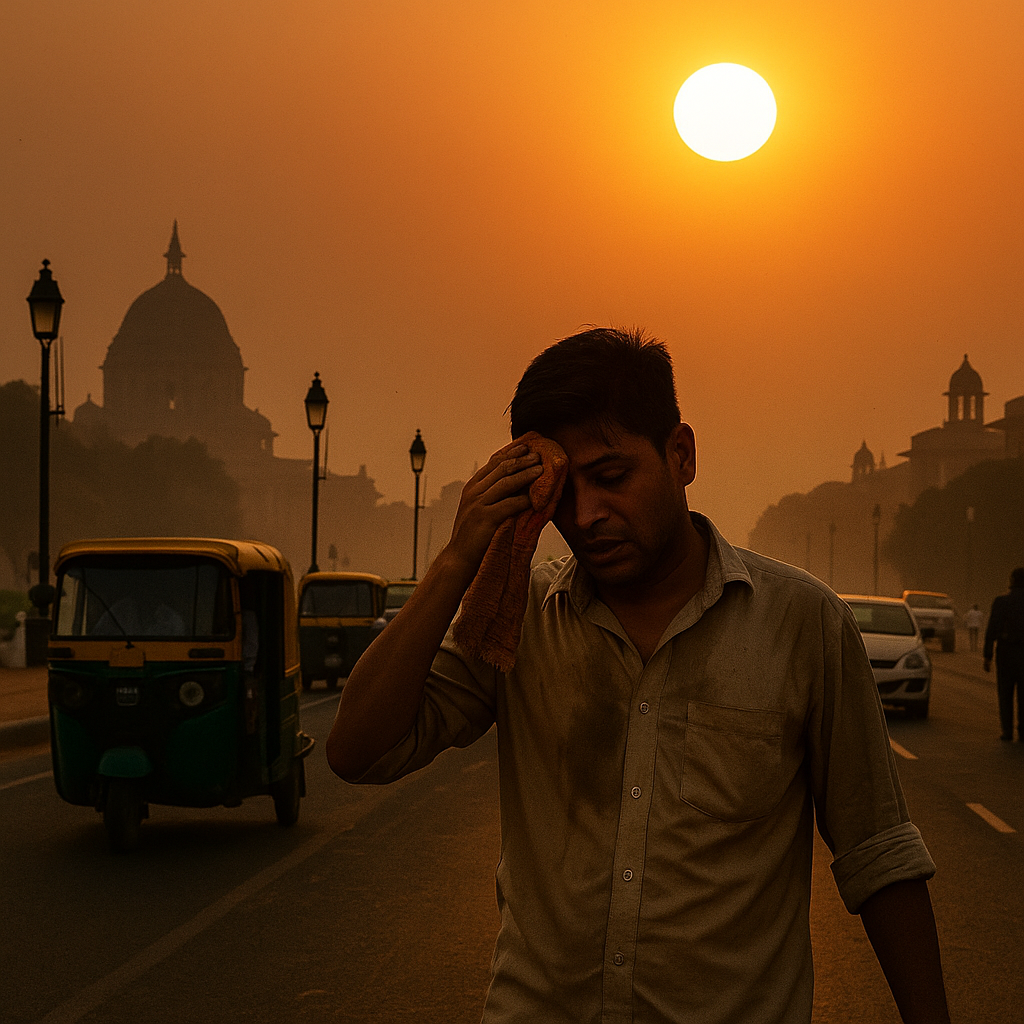
Delhi is reeling under yet another punishing heatwave, with temperatures once again breaching the 44°C mark. As the capital city bakes under relentless sun and dry winds, authorities have issued public health advisories urging residents to take caution. The discomfort index, which takes into account both temperature and humidity, has made the conditions even more dangerous, especially for outdoor workers, the elderly, and those with pre-existing health conditions.
This article delves deep into the current weather scenario in Delhi, its underlying causes, the regional climate trends, and the impact on public health and infrastructure, while also highlighting the urgent need for long-term mitigation strategies in the face of climate change.
The Current Situation
Today, Delhi recorded one of its hottest days of the year, with maximum temperatures hovering around 44°C in several regions. Localities such as Najafgarh, Ayanagar, Palam, and Pitampura bore the brunt of the heat. Although the Safdarjung observatory, which provides the official reading for the city, showed a marginally lower temperature at 42.1°C, the actual feel was significantly higher due to hot winds and humidity.
Skies remained clear with no respite from rain, and northwesterly winds sweeping across the plains exacerbated the harshness of the conditions. As a result, the Indian Meteorological Department (IMD) issued a yellow alert for Delhi and surrounding areas, predicting continued high temperatures over the next two days.
Meteorological Context
The current heatwave is not a sudden anomaly. It is a continuation of a trend that began in late April and early May. A combination of meteorological and geographical factors has contributed to the prolonged period of extreme temperatures. These include:
-
Delayed Monsoon Activity: The southwest monsoon, which usually brings much-needed moisture and rainfall, has been sluggish this year. Its delay in reaching the northern plains has extended the dry period.
-
Weak Western Disturbances: These disturbances, which bring short spells of rain and cooler temperatures, have largely been absent this season, allowing heat to accumulate.
-
High-Pressure Systems: A persistent high-pressure zone has developed over the Indo-Gangetic plains, trapping warm air and creating a dome-like effect that amplifies surface heating.
-
Urban Heat Island Effect: Delhi, being a heavily urbanized city, retains more heat than surrounding rural areas due to concrete structures, vehicular emissions, and limited green cover.
These elements have collectively contributed to the intense heatwave affecting Delhi and neighboring states.
Regional Heatwave Trends
The current episode is part of a larger heatwave sweeping across northern India. States including Punjab, Haryana, Rajasthan, and Uttar Pradesh have reported similar conditions, with many districts recording temperatures above 45°C.
In Rajasthan, areas like Churu and Barmer have regularly seen mercury touching 46°C. Haryana’s Hisar and Sirsa have also reported scorching conditions. These trends are not limited to India alone. Similar weather patterns have been observed in Pakistan, where many cities are enduring even higher temperatures.
The synchronization of heat across the region points to large-scale atmospheric circulation patterns and the growing impact of climate change.
Public Health Emergency
The ongoing heatwave is not just a discomfort but a serious public health concern. Hospitals across the National Capital Region have reported an increase in cases of heatstroke, dehydration, and heat exhaustion. The most vulnerable sections of the population include:
-
The elderly and children
-
Outdoor laborers such as construction workers and traffic personnel
-
People with chronic illnesses like diabetes and cardiovascular conditions
-
Residents of poorly ventilated, densely populated neighborhoods
Heatwaves strain the body’s ability to regulate temperature. Prolonged exposure can lead to heat cramps, heat exhaustion, or even fatal heatstroke. Emergency medical facilities have been put on alert, and temporary water stations and cooling shelters have been established in several areas.
The city’s health department has urged residents to stay hydrated, wear light clothing, avoid stepping out during peak hours (11 am to 4 pm), and seek immediate medical help if symptoms like dizziness, nausea, or confusion arise.
Infrastructure Under Stress
Extreme temperatures are taking a toll on Delhi’s infrastructure. The power grid is under severe pressure as air conditioners, coolers, and fans run at full capacity. Peak electricity demand has crossed 8,600 megawatts in the past week—a record high for this season.
Water supply is another major concern. With no rainfall and increased usage due to the heat, water reservoirs are depleting quickly. Groundwater levels, already under stress, are dropping further. In some parts of the city, water tankers are the only source of drinking water.
Public transport systems are also affected. The Delhi Metro has reported overheating of rail tracks, while buses experience mechanical breakdowns due to engine stress and overheating.
Additionally, school schedules have been adjusted, with many institutions opting for early summer breaks or reduced class hours to ensure student safety.
Environmental and Ecological Impact
Heatwaves have significant effects on the environment and biodiversity. Urban flora suffers due to heat stress and lack of moisture. Trees shed leaves prematurely, and green belts dry up. Parks and public gardens need increased watering, straining municipal resources.
Birds and stray animals also face challenges. Many die due to lack of water and heat-related stress. Environmentalists have called for setting up water troughs in public spaces and shaded rest areas for animals.
Air quality, while usually a concern during winters, deteriorates even in summer due to ground-level ozone formation. High temperatures catalyze chemical reactions between nitrogen oxides and volatile organic compounds, producing ozone that aggravates respiratory issues.
Economic Consequences
Heatwaves carry hidden economic costs that often go unnoticed. Labour productivity dips sharply as workers are forced to take frequent breaks or halt work altogether. Construction, agriculture, logistics, and other outdoor-dependent sectors suffer the most.
Healthcare costs rise due to an increase in heat-related illnesses. Energy bills surge for households and businesses, and the city’s economy slows down as outdoor commercial activities dwindle. Small vendors, especially those selling perishable goods, face high wastage rates.
These economic shocks, though not as visible as physical damage from floods or storms, gradually erode urban resilience and growth.
Government Measures and Public Response
The Delhi government has initiated several steps to manage the crisis:
-
Heatwave Action Plans: Public awareness campaigns have been launched via radio, social media, and public announcements.
-
Water Distribution: Extra water tankers have been deployed in areas with low supply.
-
Power Management: Authorities are monitoring electricity consumption and ensuring backup systems are ready.
-
School and Work Guidelines: Education departments have been advised to keep classes indoors and adjust schedules.
Public cooperation has also increased. NGOs and citizen groups have set up water booths and distributed ORS (oral rehydration solution) packets. Social media platforms are being used to share heat safety tips.
However, experts believe that more proactive, long-term strategies are needed to tackle recurring heatwaves effectively.
Climate Change and the Future of Delhi’s Summers
Scientists agree that climate change is intensifying heatwaves both in frequency and severity. The capital has seen a consistent rise in average summer temperatures over the past two decades.
Climate models predict that Delhi will experience longer heat spells, higher average temperatures, and more days above 40°C in the coming years. Without aggressive mitigation, such as reducing carbon emissions and increasing green cover, Delhi’s climate may become increasingly inhospitable during summers.
Mitigation strategies could include:
-
Expanding urban forests and shaded zones
-
Implementing green roofing and reflective building materials
-
Revamping water conservation techniques
-
Promoting renewable energy and reducing vehicular emissions
Urban planning must adapt to create a more heat-resilient city.
Conclusion
Delhi’s current heatwave is a stark reminder of the growing vulnerabilities in a rapidly urbanizing and warming world. The 44°C temperature recorded today is not just a number—it represents the mounting challenges of public health, infrastructure strain, environmental degradation, and socio-economic disruption.
As citizens and policymakers respond to this extreme event, the focus must shift from reactive measures to long-term, sustainable solutions. Adapting to a hotter future is no longer optional; it is imperative for the survival and well-being of millions living in the nation’s capital.
Delhi must brace itself—not only for this week’s heat—but for the summers yet to come.