








Introduction
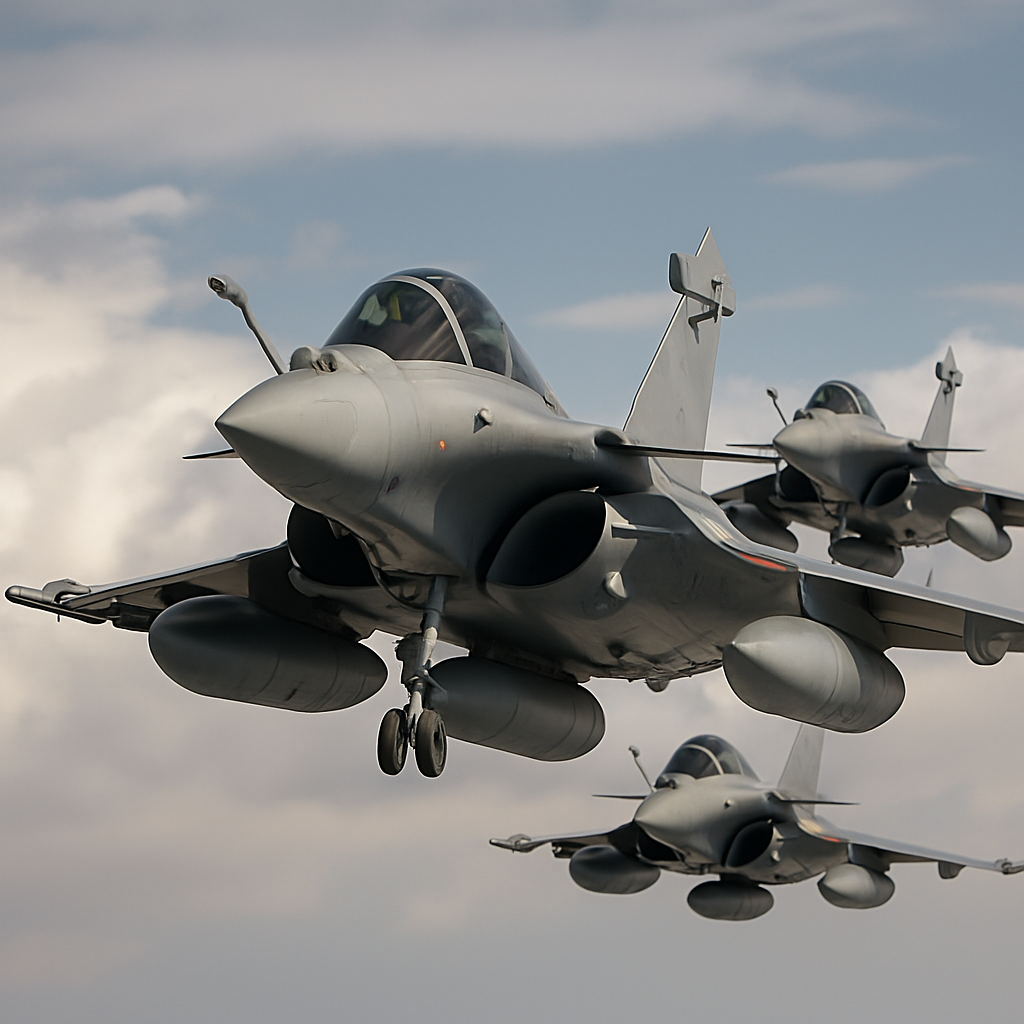
The Dassault Rafale, a French twin-engine multirole fighter aircraft, has become a cornerstone of modern air combat strategies. Designed for air supremacy, ground support, reconnaissance, and nuclear deterrence missions, the Rafale’s versatility, technological edge, and combat readiness have made it a preferred choice for several air forces across the globe. With its growing presence in Asia and Europe and recent developments in its deployment and manufacturing, the Rafale continues to make headlines in global defense circles.
India’s Strategic Enhancements with Rafale
Indigenous Manufacturing Initiatives
India has taken a major step toward self-reliance in defense production by initiating local manufacturing of Rafale components. A collaboration between a leading French defense firm and an Indian aerospace conglomerate has resulted in the commencement of Rafale fuselage manufacturing in Hyderabad. This development not only reduces dependency on foreign imports but also strengthens India’s defense industrial base. By building such critical components domestically, India is enhancing its strategic autonomy while contributing to the global supply chain for these advanced fighter jets.
Naval Expansion: Rafale M Acquisition
In response to the need for carrier-based strike capabilities, the Indian Navy is acquiring 26 Rafale M (Marine) aircraft. These jets will operate from India’s aircraft carriers, bolstering maritime security and enhancing naval deterrence. Designed to take off and land on carriers with limited runway lengths, the Rafale M is a perfect fit for naval operations, offering superior range, precision strike capability, and reliability. These new jets will replace aging platforms and bring interoperability with the Air Force’s fleet, facilitating joint operations across land and sea.
Integration of Indigenous Weaponry
India is also focusing on integrating homegrown weapons into the Rafale platform. Indigenous air-to-air and air-to-ground missiles are undergoing trials for compatibility with the Rafale’s systems. This includes high-precision standoff munitions and advanced beyond-visual-range air-to-air missiles. These efforts are aimed at enhancing the aircraft’s combat potential while promoting domestic defense technologies. This integration aligns with national goals of defense innovation and technological independence.
Operational Deployments and Exercises
Exercise Aakraman
In recent months, the Indian Air Force conducted a high-intensity air combat exercise that prominently featured the Rafale. This multi-phase operation simulated deep strike missions, electronic warfare, and precision engagement in varied geographical conditions. The Rafale’s performance demonstrated its capability to execute strategic missions with accuracy and speed. The exercise served as a platform to test real-time coordination among various squadrons and validate the effectiveness of air power in multi-theater operations.
International Collaboration: Exercise Tarang Shakti
The Rafale was also central to India’s participation in an international multilateral air exercise. This large-scale operation included several global air forces and emphasized interoperability, joint command structures, and shared strategic interests. The participation of the Rafale in such global platforms underlines its compatibility with different defense systems and doctrines. These exercises further strengthen diplomatic and defense ties between nations and affirm the operational maturity of the aircraft.
Global Perspectives on Rafale
Indonesia’s Procurement Plans
Indonesia is one of the latest countries to incorporate the Rafale into its air force modernization efforts. The initial batch of aircraft is expected to be delivered in the coming year, with additional units scheduled over the next several years. This procurement reflects a broader regional trend of nations upgrading their aerial defense systems in response to evolving security challenges. The Rafale’s advanced radar, multirole versatility, and combat readiness make it a logical choice for countries looking to bolster national security and maintain regional stability.
France’s Defense Strategy
The country of origin for the Rafale is increasing its own investment in the platform as part of its national defense upgrade. Recent announcements revealed plans for enhanced orders of the jet to replace aging fleets and strengthen nuclear deterrence capabilities. The decision reaffirms the Rafale’s importance in strategic planning and national defense policy. The newer variants are expected to incorporate next-generation avionics, enhanced radar systems, and expanded weapons compatibility to meet future threat scenarios.
Challenges and Controversies
Disinformation Campaigns
In the backdrop of heightened regional tensions and military engagements, coordinated efforts have emerged aiming to discredit the Rafale. These campaigns seek to question its effectiveness and reliability, especially in the context of its operational deployments. However, analysts suggest that these narratives are part of broader information warfare strategies aimed at undermining trust in critical defense assets. Despite these attempts, real-world performance and expert assessments continue to validate the aircraft’s credibility.
Operational Losses
Recent military confrontations have led to significant losses on both sides of a regional conflict, with reports confirming the downing of high-value air assets. Among them were instances involving Rafale units. These losses, while operationally sensitive, reflect the intense nature of modern aerial warfare where even technologically advanced platforms can be vulnerable. The incidents have prompted calls for enhanced electronic countermeasures, better battlefield intelligence, and increased pilot training to mitigate future risks.
Technological Upgrades and Future Roadmap
Radar and Avionics Enhancements
The Rafale is set to receive major upgrades in its radar and avionics suite. These enhancements include AESA radar improvements, electronic warfare upgrades, and integration of artificial intelligence for pilot assistance. With evolving aerial threats and the proliferation of stealth platforms, these upgrades aim to maintain the Rafale’s edge in both defensive and offensive scenarios.
Stealth and Survivability
Future variants of the Rafale are expected to incorporate more advanced stealth features, including radar-absorbing materials and signature reduction techniques. Enhanced survivability features such as improved countermeasures and active decoy systems are also under development. These improvements will enable the Rafale to operate more safely in contested airspace while maintaining its mission effectiveness.
Joint Projects and Multinational Development
The Rafale program is also exploring joint development opportunities with friendly nations for next-gen variants. This includes discussions on shared R&D, common avionics architecture, and modular weapons systems that can be adapted for specific regional requirements. Such cooperation not only reduces costs but also encourages cross-national standardization and deeper strategic ties.
Economic and Industrial Impact
Boost to Local Industries
The domestic manufacturing of Rafale components is creating a ripple effect across the Indian defense industry. It has stimulated demand for local suppliers, sub-contractors, and advanced engineering services. This initiative is expected to generate thousands of skilled jobs and create long-term benefits for aerospace clusters in India. It also opens doors for potential exports of Indian-made parts and technology to other nations operating the Rafale.
Foreign Direct Investment and Technology Transfer
Strategic agreements associated with the Rafale include clauses on technology transfer, which has long-term implications for domestic defense capabilities. These transfers allow local firms to develop expertise in aerospace systems, composite materials, engine technologies, and maintenance procedures. In turn, this reduces life-cycle costs, improves serviceability, and accelerates the maturity of the defense sector.
Conclusion
The Rafale fighter jet continues to be a critical asset in the evolving landscape of modern air combat. Its integration into multiple air forces, strategic deployments in complex operations, and continuous technological upgrades underscore its enduring relevance. Despite challenges, including disinformation and operational risks, the aircraft’s consistent performance and global appeal make it a benchmark in modern aerial warfare.
As countries increasingly focus on air superiority, indigenous defense production, and joint development initiatives, the Rafale stands as a symbol of military sophistication, geopolitical alignment, and technological innovation. The next few years are likely to witness further expansion of its role in global defense strategy, as well as deeper integration into regional security frameworks.