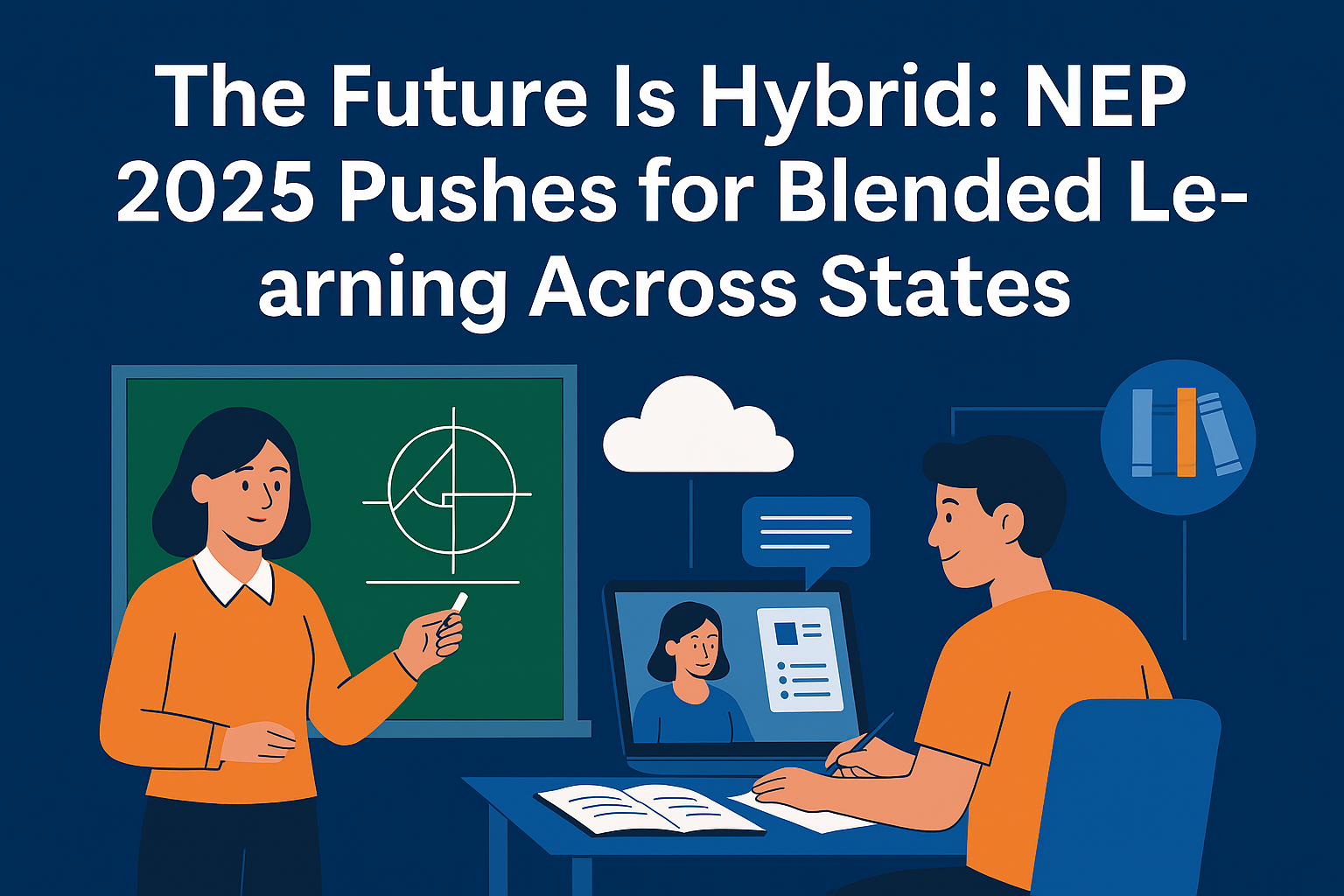
India’s education system is undergoing a significant transformation as the National Education Policy (NEP) 2025 places strong emphasis on blended learning—a model that combines traditional classroom teaching with digital technologies and online platforms.
As various states begin to implement this hybrid approach, the focus is shifting toward creating a more flexible, accessible, and engaging education system that meets the needs of 21st-century learners.
Blended Learning: The Core of NEP 2025
Blended learning under NEP 2025 merges the best of two worlds: conventional face-to-face teaching and digital instruction. This hybrid model provides learners with the flexibility to absorb content at their own pace while maintaining interaction with teachers and peers.
The policy advocates for leveraging technology not only to supplement existing teaching methods but also to enhance student engagement, provide personalized feedback, and close learning gaps. By making digital learning an integral part of the curriculum, NEP 2025 aims to revolutionize how education is delivered in both urban and rural areas.
State-Wide Implementation Strategies
Several Indian states have started adapting their education systems to support blended learning. These efforts span across infrastructure development, curriculum restructuring, and teacher upskilling:
Curriculum Integration
Curricula are being redesigned to include multimedia content, project-based assignments, and digital assessments. E-books, educational videos, interactive simulations, and cloud-based platforms are now part of daily instruction.
Digital Infrastructure
States are investing in:
-
Smart classrooms equipped with internet, projectors, and smartboards
-
Tablets or low-cost laptops for students
-
State-level Learning Management Systems (LMS) and digital content libraries
-
Access to national platforms such as DIKSHA and SWAYAM
Educator Empowerment
A critical element of the shift involves training educators to effectively deliver hybrid instruction. Workshops, certifications, and digital teaching toolkits are being introduced to enable teachers to transition smoothly into the new model.
Key National Programs Supporting the Shift
The central government is facilitating the transition through several initiatives:
-
PM eVidya: A multi-platform education initiative providing content via TV channels, radio, and digital apps
-
DIKSHA: A digital infrastructure platform offering lesson plans, assessments, and classroom aids
-
NDEAR (National Digital Education Architecture): A framework for building a unified digital education ecosystem across all states
These programs provide content, tools, and templates to help schools move from a physical-only model to a hybrid one, tailored to regional needs.
Benefits of the Blended Model
Blended learning introduces several advantages that align with the evolving needs of students and teachers:
-
Increased Accessibility: Students in rural or underserved areas can access high-quality resources, even outside the classroom.
-
Student-Centric Learning: Learners can progress at their own pace, review material as needed, and explore additional content.
-
Enhanced Engagement: Interactive media, gamified lessons, and collaborative platforms make learning more dynamic.
-
Real-Time Feedback: Digital tools enable teachers to track student performance and adapt instruction accordingly.
Challenges in Execution
Despite its promise, blended learning faces several implementation hurdles:
The Digital Divide
There is a considerable gap between urban and rural areas in terms of internet connectivity, power supply, and availability of devices. Bridging this divide is essential to avoid further marginalizing vulnerable learners.
Training & Mindset Shift
Many teachers lack familiarity with technology. Beyond tools and access, there is a need for a mindset shift—from delivering lectures to facilitating learning in both physical and virtual environments.
Language & Inclusivity
Blended content needs to be multilingual and culturally relevant. One-size-fits-all platforms may not cater effectively to diverse student populations across states.
Cost and Sustainability
Creating and maintaining a blended learning infrastructure is resource-intensive. Financial planning, along with partnerships and subsidies, will be vital to sustain the model.
State-Level Examples
Kerala
The state has digitized thousands of classrooms under its smart education program. Students and teachers now have access to cloud-based learning tools, and further investments are being made in AI-driven content delivery.
Maharashtra
By integrating digital textbooks and animated educational content into regular instruction, Maharashtra is helping both students and teachers transition smoothly into the hybrid model.
Delhi
New pilot projects in government schools involve rotating schedules, where students alternate between in-class and online learning. Results are being tracked to scale the approach further.
What Needs to Happen Next
To successfully realize the vision of NEP 2025, a few strategic actions are critical:
-
Universal Device Distribution: Provide low-cost or subsidized tablets to students from low-income households.
-
Localized Content Creation: Develop region-specific materials in local languages, incorporating cultural references and regional examples.
-
Continuous Training for Teachers: Offer modular, on-demand training programs so teachers can adapt at their own pace.
-
Parental & Community Involvement: Educate parents and communities about blended learning so they can support children’s digital education journeys.
-
Clear Assessment Frameworks: Develop methods for evaluating learning outcomes across hybrid environments, ensuring consistency in grading and progression.
Conclusion: The Road to a Modern Learning System
The transition to blended learning is not just a trend—it’s a strategic evolution aligned with global educational shifts. NEP 2025 recognizes that the future of learning is hybrid, and it is laying the groundwork for a more inclusive, adaptive, and forward-looking system.
This hybrid model, if implemented with equity, infrastructure, and training at its core, has the potential to level the playing field and equip Indian students with the skills needed in a rapidly changing world.
As schools, educators, and governments work together, India is setting the stage for a robust and resilient educational ecosystem—one that blends the best of technology and tradition for generations to come.