









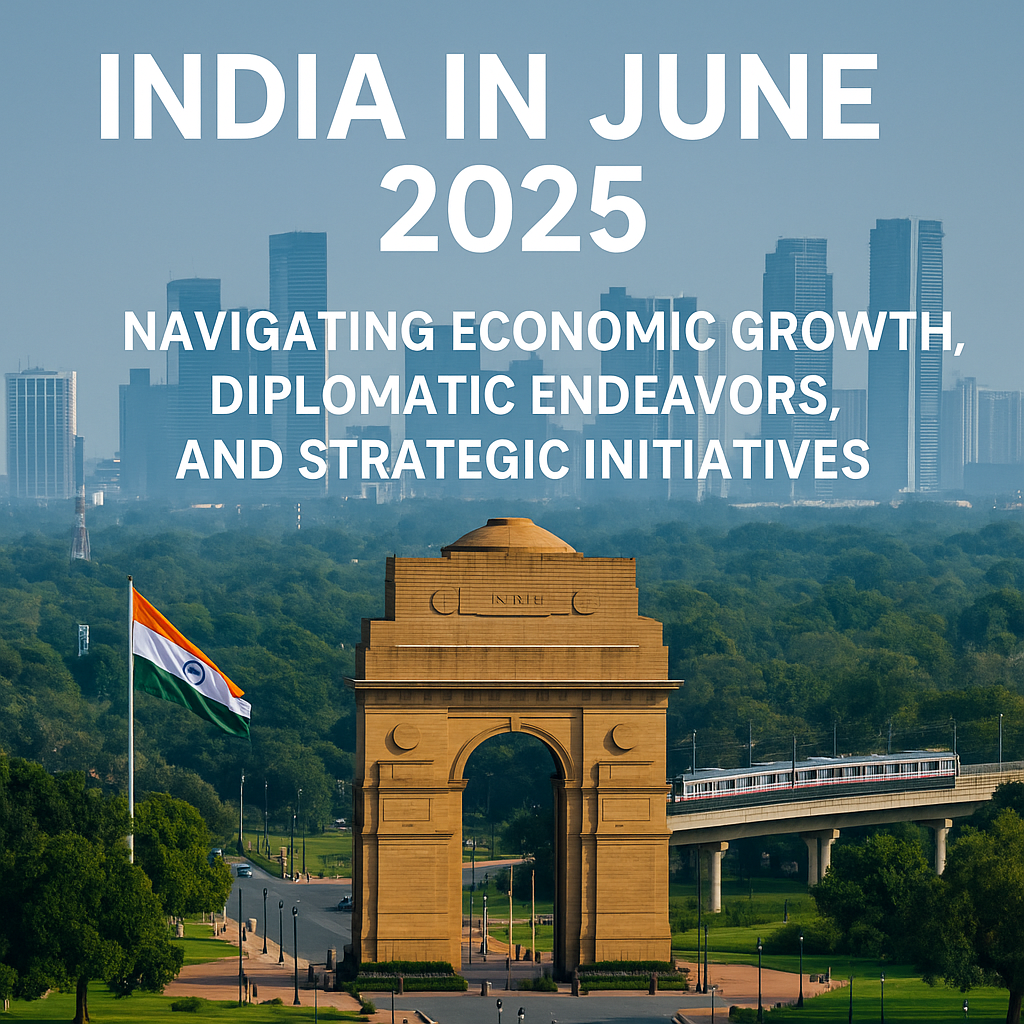
As India steps into June 2025, the nation finds itself at a pivotal juncture marked by significant economic decisions, diplomatic engagements, and infrastructural advancements. From anticipated monetary policy shifts to strategic international partnerships, the country’s trajectory reflects a blend of resilience and ambition.
Economic Landscape: Anticipated Monetary Easing Amidst Global Uncertainties
The Reserve Bank of India (RBI) is expected to implement a 25 basis points reduction in the repo rate in early June, marking the third consecutive cut in a series of monetary easing measures. This decision is driven by persistently low consumer price inflation, which continues to remain below the RBI’s median target. The rate cut aims to support economic growth amid ongoing global uncertainties, including shifts in international trade policies and tariff adjustments.
Market analysts express growing optimism about India’s economic revival in the upcoming quarter. With liquidity infusions through open-market operations, targeted repo auctions, and forex swaps, the financial system is poised for improved capital availability. This, coupled with a favorable base effect from the previous fiscal cycle, is expected to accelerate both economic growth and corporate earnings.
Strengthening International Ties: India-Australia Trade Pact and British Airways Expansion
India and Australia are in advanced discussions toward finalizing a comprehensive free trade agreement. The pact focuses on key sectors such as critical minerals, clean energy, agriculture, and information technology. India’s interest in Australia’s critical mineral resources is part of a broader strategy to secure supplies vital for green technologies, electric vehicles, and national defense industries.
On the back of expanding trade and economic cooperation, global companies are reevaluating their strategies in the Indian market. British Airways, for instance, has announced plans to increase its presence in India. The airline intends to expand its network with more routes and flight frequencies, connecting major Indian cities with the United Kingdom. The move reflects growing business confidence and is aligned with the increasing demand for both passenger and cargo traffic between the two nations.
Diplomatic Initiatives: Post-Conflict Outreach and Regional Engagements
Following a recent military conflict with Pakistan, the Indian government has launched a global diplomatic outreach campaign. The initiative aims to present India’s actions as necessary counterterrorism measures in response to a violent attack that targeted tourists in Kashmir. This diplomatic push seeks to strengthen India’s position on the global stage and rally international support, particularly from Western powers and strategic allies.
At the same time, India is enhancing regional cooperation. In early June, the country is scheduled to host the foreign ministers of five Central Asian nations. The summit will focus on regional security, counterterrorism, and deradicalization strategies. Strengthening ties with Central Asia is seen as vital for both strategic depth and energy cooperation, given the region’s geopolitical importance and natural resource wealth.
Infrastructure and Development: Advancements in Transportation and Agriculture
India’s infrastructure development continues to gather momentum. One of the flagship projects nearing completion is the Delhi–Meerut Regional Rapid Transit System (RRTS). Once fully operational by June 2025, this high-speed corridor will drastically reduce travel time between Delhi and Meerut. It represents a major step in reshaping urban transportation in the National Capital Region, supporting both economic development and environmental sustainability.
In the agricultural sector, the country is witnessing unprecedented growth in food grain production. Wheat output is expected to reach a record high of over 117 million metric tons, largely due to expanded cultivation of high-yield seed varieties. Rice production, too, is projected to reach an all-time high, supported by favorable climatic conditions and improved farming practices. These developments not only bolster domestic food security but also position India as a key exporter in global agricultural markets.
Political Developments: BJP’s Return in Delhi and Governance Celebrations
The 2025 Delhi Legislative Assembly elections have brought about a significant political shift. The Bharatiya Janata Party (BJP) has returned to power with a commanding majority, ending nearly three decades of opposition rule in the state. Rekha Gupta has taken office as the new Chief Minister, marking a new chapter in the capital’s political landscape.
To celebrate 11 years of Prime Minister Narendra Modi’s leadership, the BJP has launched a national campaign with a focus on women’s empowerment. Colonel Sofiya Qureshi and Wing Commander Vyomika Singh—both of whom gained public recognition during recent military operations—have been selected as the faces of the campaign. The initiative aims to highlight women’s contributions to national defense and governance and reinforce the government’s commitment to gender equity.
Environmental Concerns: Rising Heatwaves and Climate Challenges
India is increasingly vulnerable to the impacts of climate change, particularly extreme weather conditions. A recent assessment has revealed that the frequency and intensity of heatwaves—especially those combining high temperatures with extreme humidity—are on the rise. These “wet bulb” heatwaves pose severe risks to human health and are expected to become significantly more common under moderate global warming scenarios.
The findings underscore the urgent need for urban planning reforms, heat mitigation strategies, and investment in public health infrastructure. State governments are beginning to implement early warning systems and community outreach programs to protect vulnerable populations during heatwave events.
Conclusion
India’s journey through June 2025 reflects a multifaceted and dynamic national landscape. On the economic front, strategic monetary easing and growth-focused reforms offer renewed momentum. Internationally, the country is building critical alliances while reaffirming its stance on national security. Infrastructure projects and agricultural achievements highlight internal progress, while political and environmental developments continue to shape public discourse.
This confluence of economic, diplomatic, and social advancements underscores India’s determination to position itself as a resilient and forward-looking global power in an increasingly complex world.