








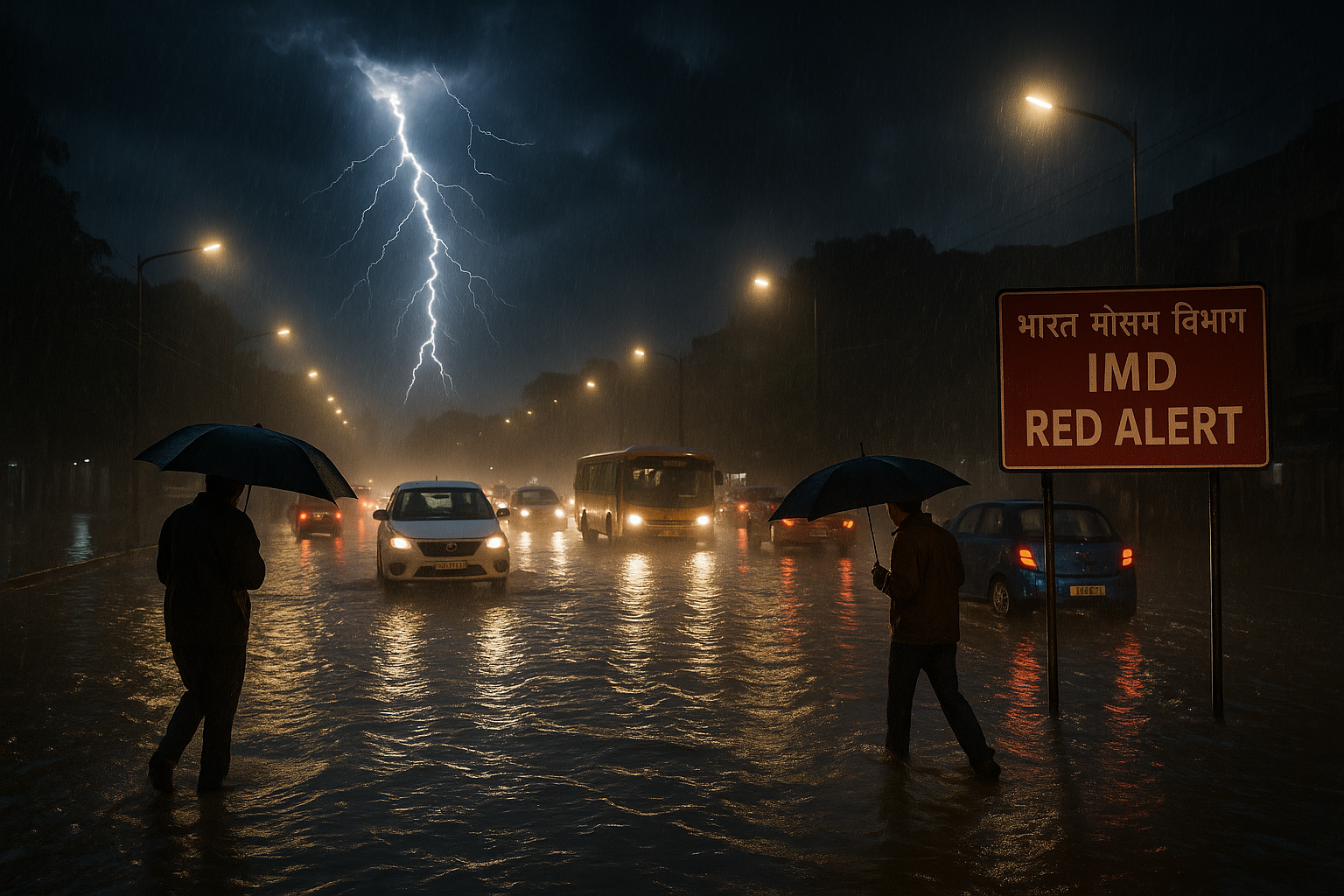
On the night of May 24, 2025, Delhi and the surrounding National Capital Region (NCR) experienced one of the most severe thunderstorms in recent years, causing widespread disruption across multiple sectors. The India Meteorological Department (IMD) had earlier issued a red alert, warning residents of intense thunderstorms, accompanied by heavy rainfall, strong winds, and lightning. The alert proved accurate as the storm swept through the capital with force, flooding streets, halting traffic, diverting flights, and disrupting essential services.
Meteorological Conditions and IMD’s Red Alert
The red alert was issued after weather satellites and radar systems detected the rapid development of a thunderstorm cell approaching Delhi from the northwest. These cells typically form due to high humidity, warm surface temperatures, and upper atmospheric instability—conditions that were all present in the capital. The IMD categorized the alert as a Nowcast, which means dangerous weather was expected within a few hours. The authorities urged citizens to stay indoors, avoid open areas, and refrain from seeking shelter under trees or electric poles during the storm.
Impact on Daily Life and City Infrastructure
As predicted, the storm arrived late in the evening, dumping heavy rain that led to waterlogging in several areas, especially in low-lying localities and major intersections. Roads quickly became impassable, causing massive traffic jams well into the night. In several neighborhoods, vehicles were stranded, partially submerged in water, or abandoned by drivers who chose to walk home.
The capital’s fragile drainage infrastructure was overwhelmed, particularly in residential colonies and commercial zones where construction debris and uncleaned drains exacerbated flooding. Commuters who had left their workplaces late were stuck in vehicles for hours. Several metro stations experienced crowd surges as stranded passengers sought alternate transportation. Emergency services, including fire and rescue teams, were inundated with calls, responding to incidents ranging from fallen trees and signboards to electrocution risks due to short circuits.
Disruption in Air Travel
One of the most visible impacts of the storm was at Delhi’s Indira Gandhi International Airport. Nearly 50 flights were diverted due to the sudden onset of the storm, including several international services. High wind speeds and reduced visibility made landing conditions dangerous, forcing airlines to reroute to nearby airports in Jaipur, Lucknow, and Amritsar. Flight schedules were thrown into chaos, with delays extending into the next day. Passengers waiting at terminals complained of inadequate information and logistical support during the disruption. Airlines issued advisories urging travelers to confirm flight status before heading to the airport.
Record Rainfall and Wind Speeds
May is typically one of the driest months in Delhi, with average rainfall around 20–25 mm. However, this storm shattered all historical records. Delhi’s Safdarjung weather observatory recorded over 180 mm of rain this month, making it the wettest May in recorded history. A significant chunk of this rainfall—more than 80 mm—came down in less than six hours during the storm. Wind speeds soared to 82 km/h, strong enough to uproot trees and dislodge hoardings and temporary structures. Residents described the experience as “monsoon-level rain with hurricane-level winds.”
Political Reactions and Public Outcry
As images and videos of submerged roads, stranded vehicles, and swaying trees went viral on social media, political leaders were quick to respond. Former Delhi Chief Minister Atishi slammed the city’s preparedness, referring to the promises of a “four-engine government” and criticizing what she called a chronic lack of planning. In a strongly worded statement, she highlighted how even minor storms were capable of bringing the city to its knees, calling for immediate investment in urban infrastructure upgrades.
Local municipal bodies, on the other hand, claimed that drainage systems were already under pressure due to ongoing pre-monsoon repairs and encroachment issues. They pointed to the intensity and unpredictability of the storm as contributing factors that made it difficult to manage.
Advisories and Precautions
Following the storm, the IMD reiterated its earlier advisories and added new ones in anticipation of more turbulent weather ahead. Citizens were asked to remain indoors during high-alert hours, secure outdoor items that could be picked up by wind, and avoid unnecessary travel. People living in older buildings or near construction sites were advised to exercise additional caution. The Delhi Disaster Management Authority also activated emergency helplines and mobilized teams to clear debris, unclog drains, and restore electricity in affected areas.
Schools in several districts were ordered to remain closed the next day as a precautionary measure, while employers were encouraged to allow remote work wherever feasible. The storm’s aftermath also highlighted the need for better communication systems, with many residents unaware of the red alert until it was too late.
Climate Concerns and Broader Implications
Meteorologists and environmental experts have pointed to climate change as a likely factor behind the increasing frequency and intensity of such extreme weather events. In recent years, Delhi has experienced unseasonal rainfall, heatwaves, and dust storms in rapid succession, placing growing stress on civic amenities and urban infrastructure. The latest thunderstorm is just another reminder that Indian cities must build resilience to climate extremes.
Urban planners have long warned that Delhi’s stormwater drainage system—based on designs dating back several decades—is no longer sufficient to cope with modern weather patterns. Unchecked urban sprawl, deforestation, and encroachment on natural water bodies have all compounded the problem.
Looking Ahead
As the region braces for the upcoming monsoon season, this latest event underscores the urgency of investing in adaptive infrastructure and early warning systems. The storm of May 24 may have passed, but it leaves behind questions that civic bodies, government departments, and residents will need to answer quickly. Was the city prepared? Could some of the damage have been mitigated? And what steps can be taken to ensure that the next red alert doesn’t spell disaster for the capital?